

Our conversation today is with Anna Lamotte, founder of Guardswell Farm, a 200-acre grassland farm on a hillside between Abernyte and Kinnaird, Perthshire. Guardswell came into the hands of the Lamotte family in 2011 and since then, has become home to a series of design-led huts, renovated cottages and rural event spaces as well as a small farm with a regenerative market garden and cider orchard. Over the course of an hour, we chatted everything from the pull of slowing down and escaping into nature to building confidence around cows to the generations of creative, entrepreneurial people who have come before Anna, shaping who she is today and the path she has carved for herself.
A note from 2026
I first spoke to Anna back in 2024, a month or so before becoming a mother. At that stage, Anna was just out of the young baby stage with her first - and I was yet to enter into it. I started writing up this piece in the early weeks of motherhood; the opening paragraphs slowly coming together over cold sips of coffee and on broken sleep - and then somewhere along the line, I paused and never quite got around to finishing it. Fast-forward to this year, I started the process again, editing and revising this piece - now being in a stage of motherhood where I have pockets of time for myself once more. Meanwhile, Anna was in the throes of the early baby stage, having just had her second. As we exchanged emails back and forth, something that resonated between us was how best intentions and ambitions, hopes and plans can sometimes be side-tracked when navigating developmental leaps and fragmented sleep - pivoting between the different parts of yourself, as a mother and creative. Some of Anna’s visions for the future are yet to be realised - something I can similarly relate to with Dulcify Journal - part of the season of life we are currently in, a pause rather than a never.
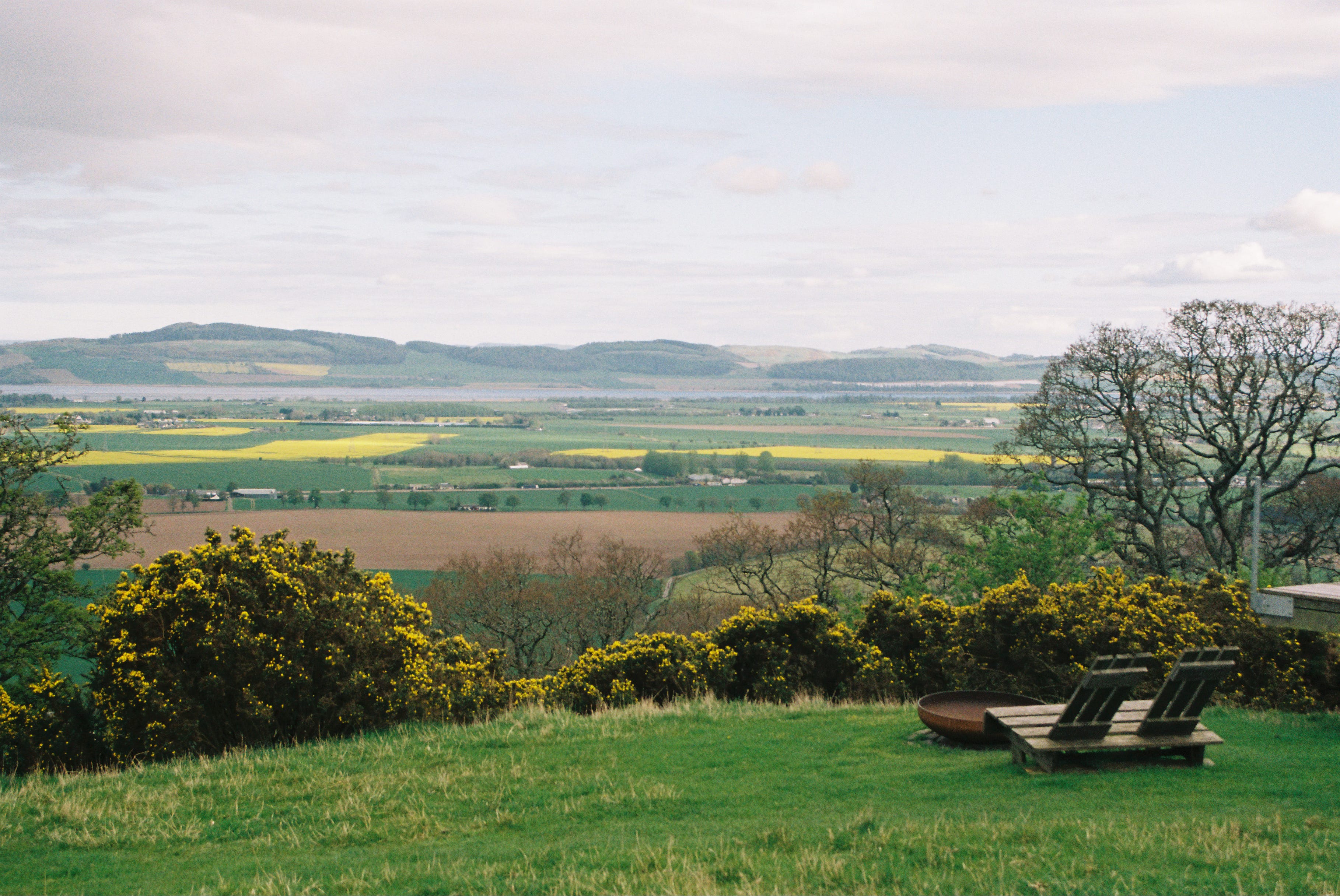
Since our first conversation - and writing this piece - I’ve had the privilege to stay at Guardswell - a last minute trip to celebrate my brother’s big birthday (not sponsored or gifted). What I didn’t fully comprehend when I spoke to Anna, was just how much of a haven Guardswell Farm is. We stayed up in the Infield where the views of the valley are spectacular, pops of yellow, green and the vast sky, where you can watch the clouds roll in, witness the sunsets and the sunrises - see the change in both the weather and the seasons. From inside the Infield, you can hear the birdsong, the patter of rain, gentle coos and louder calls of the cockerel, You are immersed in nature, something that for a city-dweller feels like a world away, a 360 flip on day to day life. There’s an awareness of nature that’s difficult to fully appreciate in the heart of the city and a slowness - to the mornings, waking up with the views stretched ahead of you. There’s no plugs in the Infield so the kettle had to be boiled on the hob and that in itself was a slow ritual, pumping the water through the foot pump, lighting the stove and boiling the kettle, fetching the milk from the cool box outside and making a pot of tea. Our stay was full of these gentle rituals - we pottered around the farm, discovering the swing at the top of the hill and the boat turned bothy and said hello to many of the animals that are at home there. Our stay there has been one of those stand-out moments of the year, one that I will treasure for years to come.
The makings of Guardswell Farm
Anna’s warmth and infectious energy emanated down the phone line as she told me, ’I’m just very quickly finishing sowing some seeds so hopefully I don’t sound too out of puff’, setting the precedent for an easy and effortless conversation - one where you feel like you’re catching up with an old friend. We jumped straight into the making of Guardswell Farm - the product of generations of farming knowledge being passed down - and of lives spent immersed in nature.
As we spoke, it became clear that food and growing are deeply engrained into Anna’s family history; her mother ran a much loved cafe called The Buttery before she was born, which operated out of their family farmhouse, surrounded by parterre herb beds, serving chervil laden quiches and beautiful open sandwiches as well as the occasional evening service. Her great granny owned Milkbar and her grandfather was a farming pioneer, selling his dairy cattle and turning to herb cultivation, forming Scotherbs which was a huge success - employing 150 staff and supplying supermarkets across Scotland at its peak. I am always so curious to learn how people come to find their paths and for Anna, it seemed serving the community - in some way - was always on the cards. It was interesting then, to find out that ‘Guardswell Farm came about really quite by accident’. Anna explained that she had studied marine biology at university but had always had an interest in food, greatly encouraged by her grandfather who always supported her cookery ambitions. Anna credited his influence in her decision to enrol in a three month diploma at Ballymaloe Cookery School in Cork after university - an experience she loved. On returning to Scotland, she considered private cheffing and running small-scale events and was in the process of gaining experience in local restaurants when her father became unwell. This became pivotal in Anna’s journey to founding Guardswell Farm as it is today.
Anna told me, ‘I had this book of all these different business ideas - deciding my next steps became a project for me and my dad.’ Originally, Anna thought of running a little kitchen from a food truck called ‘Shed’, so people could come and learn to cook while staying on the farm. Laughing she continued, ‘But it grew arms and legs big time’, eventually snowballing into renovating the three houses on the farm and building four huts, which each have their own character and wood burning hot tubs.


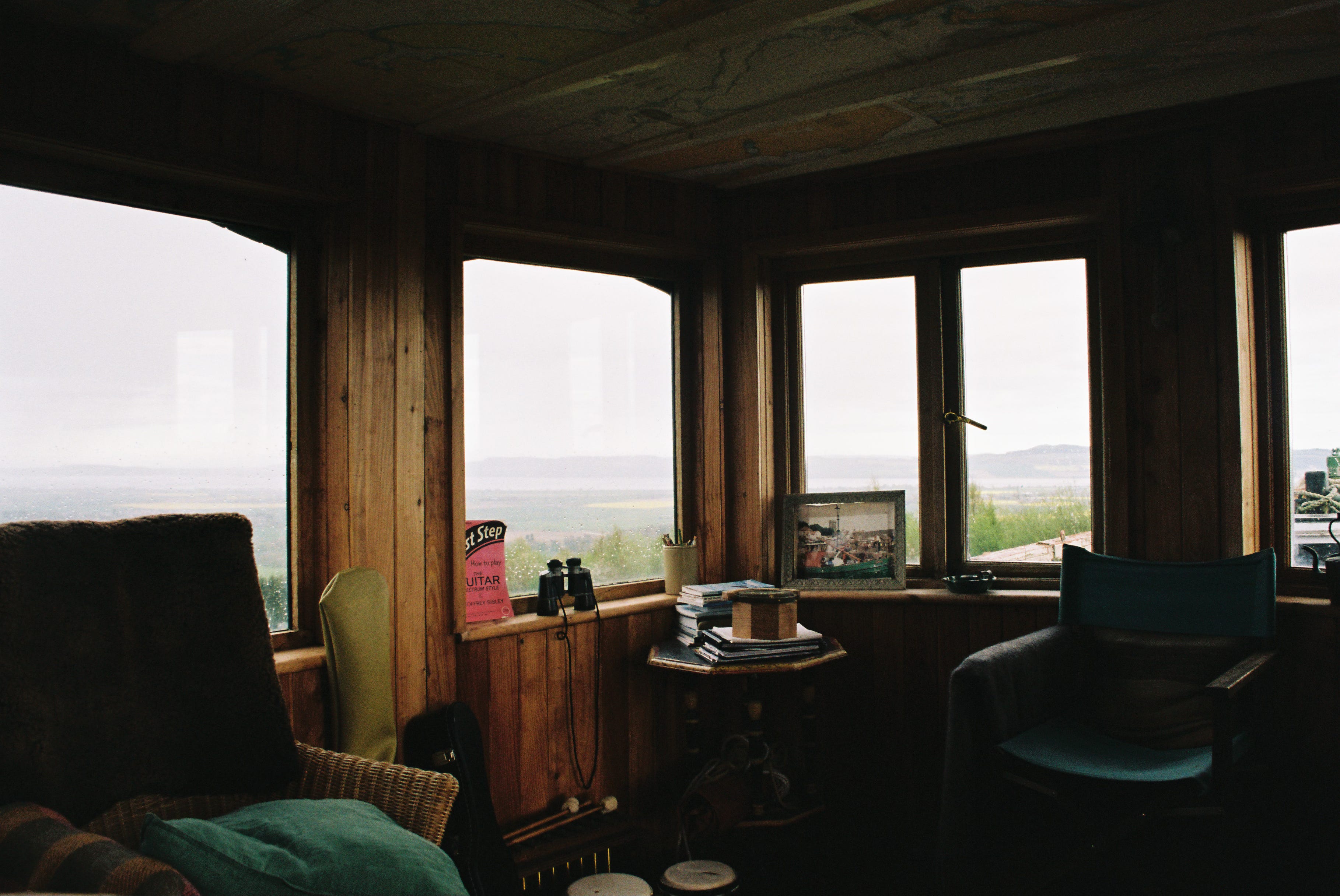
‘Shed’ had a flip and is now one of those spaces - a snug, off-grid escape called The Kailyard. The steading also underwent major renovations along with the cow shed, which they planned to run cookery classes from. She reflected, ‘We wanted to create a space for people to come from their busy lives, somewhere serene and immersive in nature and digital free.’ She thoughtfully added, ‘I’ve always felt so fortunate to be caretakers of Guardswell Farm, the views are amazing and it was just one of those things where we thought it would be a shame not to share that with other people.’


In order to make hosting cookery classes and community groups a reality, they needed to make enough money - and so the financial solution was to turn the steading into a wedding venue. This is an essential part of their business model but is not the whole part - there are so many other chapters and strands to Guardswell that make it the place it is.
Outside of creating a welcoming space, Anna also expressed how keen she was for there to be a big educational element to their offerings at Guardswell, ‘I was really keen to have lots of children on the farm and teach them about farming and food and I guess some forgotten skills’. Having their daughter, Aster, has further cemented this - especially as she has grown and potters alongside Anna, helping her tend to the tomatoes in the greenhouse and the animals around the farm.


Life at Guardswell Farm
From here, we spoke about what life looks like on the farm. Anna explained that Digby, her husband, and herself work on the farm side of the business. Each morning they do the essential animal chores, try and squeeze in some admin and then work on weekly goals, while juggling the care of their little one. I asked Anna how she learnt about running a farm and she explained that they did have a small flock of sheep growing up but have mostly learnt by doing, trial and error, speaking to lots of people and watching many YouTube videos. She told me, ‘I don’t think you ever stop learning’. She went on to tell me that her 8 sheep flock that she bought after her time at Ballymaloe have turned into 150. Curious to learn more about them, Anna explained that they are Hebredian sheep which means they are a native, fairly hardy breed that are relatively self sufficient. Unlike more commercial sheep which you might bring into a shed during lambing season, the Hebrideans have a nice sheltered outside paddock and generally need minimal assistance with birthing their lambs. They also have a small herd of cows, which Anna admitted she finds a lot more daunting in terms of handling than the sheep. Laughing, she told me ‘We luckily have an amazing vet who helps me with all my wild questions’ - an invaluable contact to have in times of difficulty when they can’t solve the problems themselves, like when Bronte the cow’s horns suddenly fell off.
As well as co-running the farm, her husband Digby also runs Diggers Fine Cider. A couple of years ago, they planted two orchards, one at Little Kinnaird in Forgandenny and another at Guardswell Farm, which include over 80 varieties of apple – a mix of eating, cooking and cider apples along with pears, quince and crab apples. While they wait for the trees to mature, they use foraged and unwanted apples from local orchards and gardens to produce small scale cider. Anna told me, ‘It’s doing really well and we are increasing our offering every year. It’s a project Digby loves doing.’
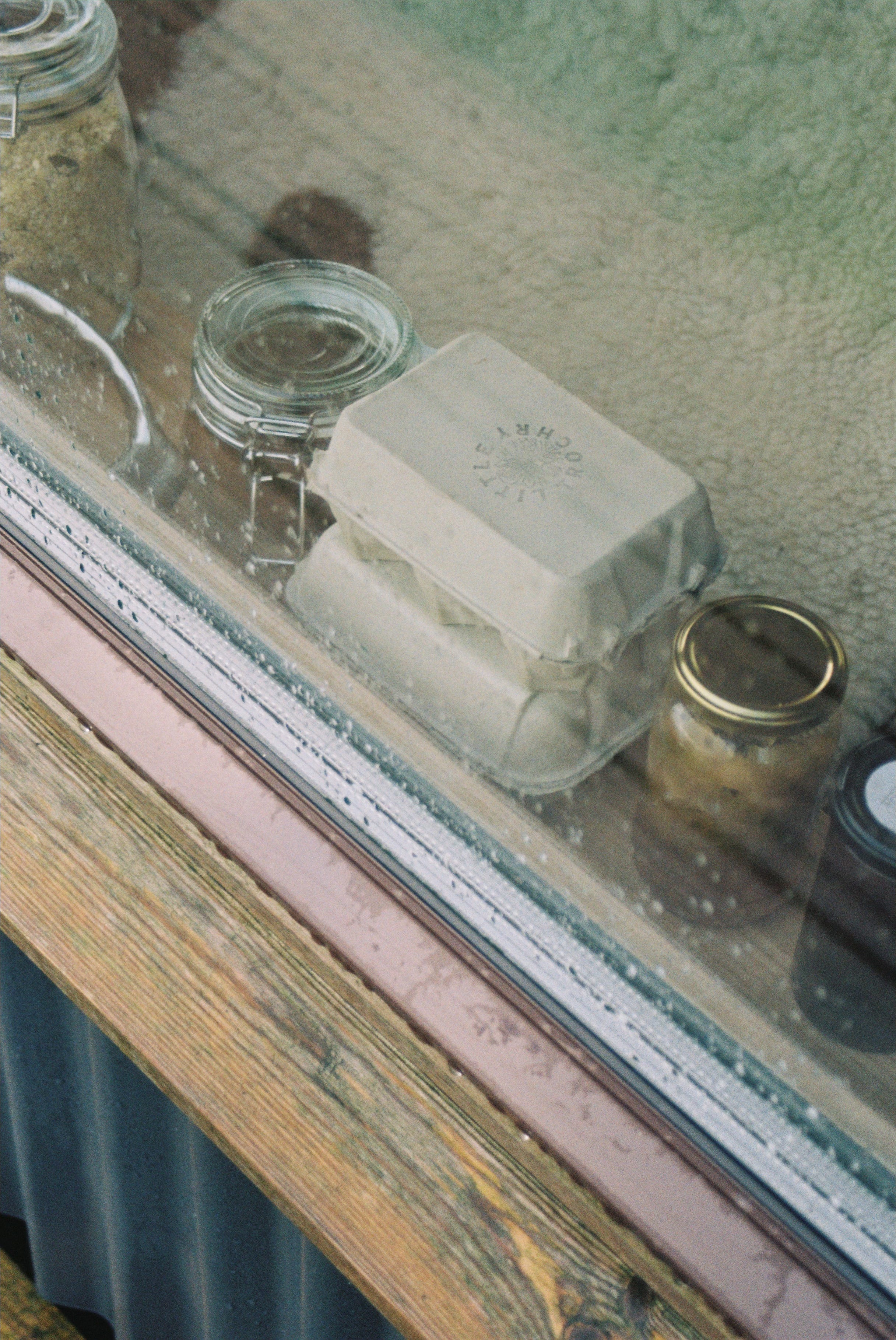
Something they have introduced in recent years are product boxes where they sell meat directly to customers through a box scheme as well as to restaurants and cafes. They have an honestly box farm stand and a shop for guests, offering meat and eggs from the farm’s many chickens. Anna reflected, ‘Looking at the state of the food and farming industry can sometimes fill me with despair and I just think if we can do anything to provide good quality, high welfare, nutritious, environmentally beneficial produce - especially to people in our local area then that’s what we want to be doing.’
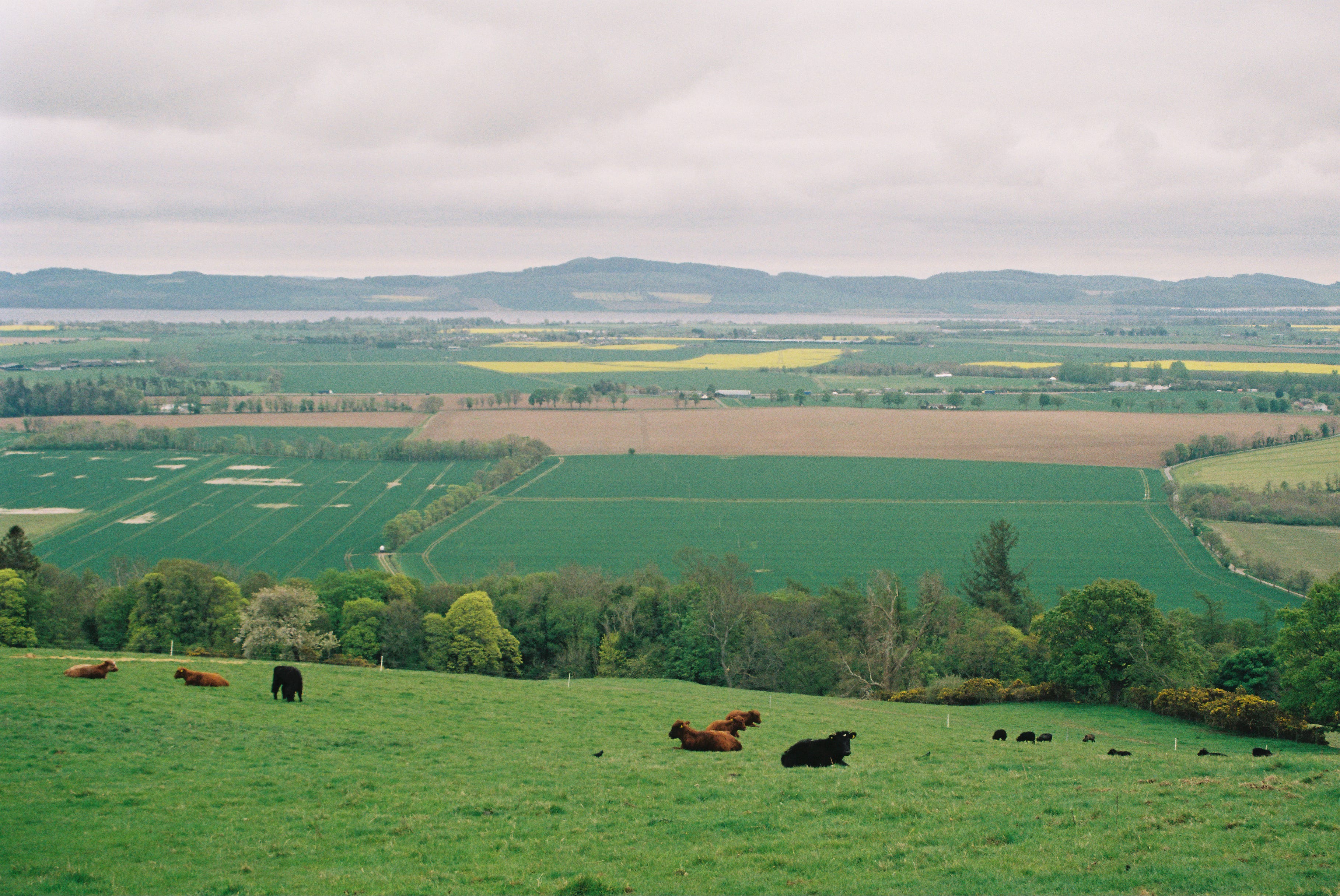
She explained that this is a big motivation in the way they are farming - working with nature is at the forefront of their farming decisions. The cows that they have on the farm are Shetlands which are the original crofters cow because they are a dual purpose. She explained they are both beef cattle as well as dairy cattle. Ultimately they would love to look at some sort of micro dairying so they could eventually produce a box with meat, vegetables, eggs, apple juice, cider and dairy in it. Anna continued, ‘I think being a small farm - 200 acres - which sounds enormous but in the grand scheme of making things work financially is not, it’s important to look at ways of making it as sustainable and as profitable as possible.’ The idea that people who come to stay at Guardswell could eat everything from there - without needing to go to a supermarket or shop, is a really lovely one and ties in beautifully with their ethos. Something they run for selected months in the year is produce markets - an opportunity for customers to come along and support folk who produce food. They run from 3pm - 7pm on certain Wednesdays, which means that customers who only have time to do a weekly shop after working hours can still support local veg and meat producers - and can shop in a more sustainable way then mass retail outlets which tend to have much greater waste, packaging and whose produce can often be grown in unsustainable ways.


On the topic of sustainability, something Anna and her team at Guardswell are working on is creating a farm that isn’t an ‘at all costs’ effort to produce food. It’s important for them to create a home for the jays, the pollinators, the honey buzzards and hares where they can thrive. Part of that is also pond life, which Anna described as ‘part of the mosaic of habitats that make up Guardswell’ and something she wants to protect - feeding into their ethos of farming alongside nature. Anna has recently been made one of the Nature Friendly Farming Champions which she described as ‘a huge privilege’.
The Future
Speaking to Anna, it is clear that her life on Guardswell Farm and as a mum, is incredibly full, with an ever-changing and growing to-do list. It seems to me that so much of the success of Guardswell has been Anna’s innovative ideas, her ability to pivot and for the farm to continuously evolve. Anna finished by telling me, ‘There’s still so much we’d like to do, but it feels like we can make a difference in what we’re doing here.’
A huge thank you to Anna for taking the time to talk to me and for sharing the journey of Guardswell Farm. You can find out more about Guardswell Farm here and follow them on socials here.
I absolutely loved this read. What an incredible story and I deeply resonate with the balancing of creative ideas and mothering and how they don't always match up at the same time! Thank you for sharing this piece!